Feel the love


Last night Audrey wouldn’t settle on her own, which is reasonably rare and after a cuddle and sing song with Daddy, the crying started again. So it was my turn to have a go. 

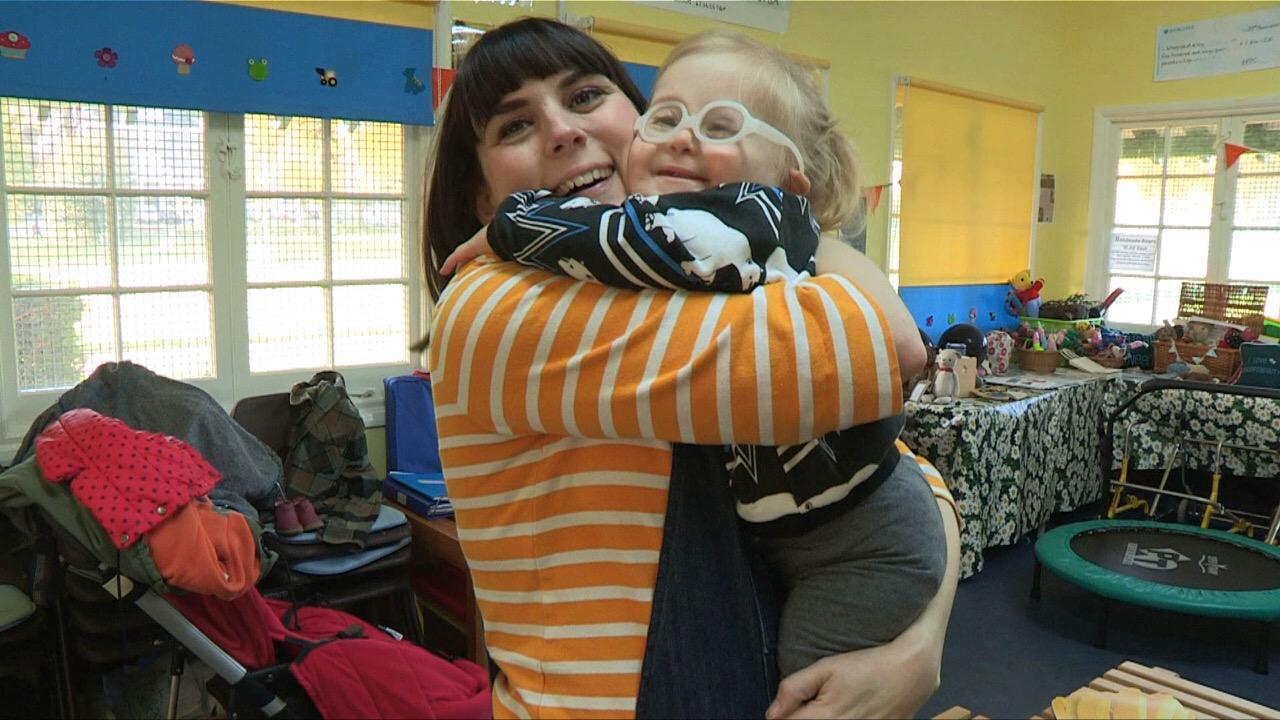
She cuddled me with one arm tucked around me, with her other hand on my hand, interweaving fingers. I told her we were holding hands and she whisper-giggled with me at the fun we were having in this dimly lit room. I rocked in the chair silently and we gazed at each other whilst playing with our hands. A moment of perfection. I could feel our love. Her face – just the most beautiful little girl I’ve ever seen, her gaze fully locked on my mine, looking very much like a child who is not sleepy and will not be rocked to sleep!

Yes, it crosses your mind: er, excuse me miss, we had just started a new series on Netflix, I was about to put my feet up with a glass of milk (a pregnancy heartburn must)… But at that moment I just felt such bliss at being there for her. Being her mother. 

I’m sure I bang on about this in every post, but it’s a heightened feeling when you’ve had such negative thoughts about your child and your imagined relationship in those early days. It scares me to think that a “syndrome” label made me question the love and connection I would have for my daughter, but it did.

In fact, I’ve just recently been filmed sharing thoughts and feelings after diagnosis for a short film that will hopefully help new parents. And on an email calling for more contributors, a mother with a grown up son with Down Syndrome questioned her involvement – she wouldn’t want him to see her talking negatively about his life. Which I completely understand. However, I really hope to explain to Audrey one day that the reason I’ve shared so much online (including some pretty upsetting thoughts and feelings) is that I want society to move forward and I want to take as much of the negativity away from other parents as I can. And I want her to know that it’s because of her, because of her fabulousness, that I feel so strongly about banging this drum and changing perceptions.

Of course, in an ideal world I want someone to receive the diagnosis and think; ‘Who cares?’, but I appreciate it won’t be that simple. But how about, after the initial shock/upset/confusion, you quite quickly move forward by thinking about a family you saw online…? A mother who wrote about love, beauty and fun… She showed that your life with your little one might just be how you had expected things to be pre-diagnosis; singing songs together, reading books and cuddling before bedtime, sharing in a peekaboo joke… The path is a smaller deviation from the original than you might think and the overriding fact that should help take the negativity away is: you are their parent and you will love one another no matter what life throws at you. 

I’m thinking that’s parenthood as standard though, isn’t it?


We go together…

Just a short crazy post about watching Grease “live” on TV today (a recording of the Broadway musical that went out live on US TV and was shown on ITV2 this afternoon).

Something so silly, so simple and yet it made me think…

Look I know this is stupid, but when I was growing Audrey in my tummy (probably even before that), I had daydreams about my daughter and the things we’d do together. Shopping for clothes, tea and cupcakes in a nice cafe, PJ nights with a girly film… And for some stupid reason when little Audrey popped out with her extra chromosome, I felt (in those early days) that all that had been ripped away. This wasn’t the daughter who would care about fashion or want to do girly things with her mummy. This was an unknown child, I wasn’t sure what she’d be capable of or would want to do, I felt completely thrown and unable to daydream about our future.

Fast forward to February 2016. Audrey is 2 and a half, she wakes from her nap and we join in on his performance of Grease just after Greased Lightning. She has just woken from a nap so is snuggled on my lap, sucking her thumb. I sing along to some of the songs, she’s gazes up at me with her beautiful eyes. When she is a bit more awake, she sits next to me on the sofa and we boogie to ‘Born to Hand Jive’, she tries to copy the moves, she sings a little. I am in heaven. My little girl and I, doing just what I always imagined we’d do together. In fact it blew me away that we shared this moment when Audrey is only 2 and half.

She continues to amaze me.


NIPT: Don’t Screen Us Out

NIPT (non-invasive prenatal testing) is being hailed as an amazing breakthrough now available on the NHS in the UK, that will save so many babies. The theory is, women will be offered this testing and there will be no need for an amniocentesis – which carries a risk of miscarriage. No need for further testing because this non-invasive test will give you an accurate answer on whether the child you are carrying has Down’s Syndrome (or Edward’s Syndrome or Patau syndrome) and then you can be prepared for their future (aka you can abort). Ok, that’s harsh, but when you consider 9 out of 10 woman abort when finding out their child has DS through amniocentesis (generally quite far down the pregnancy time line), how many will choose to abort when having this accurate test at 12 weeks? 

This has rocked the DS community because we are basically heading towards the elimination of Down’s Syndrome altogether. Which feels like a pretty crazy concept when you actually have a child with DS. We’re part of a community that will cease to exist, but not only that, it will cease to exist because society decided that babies with Down’s Syndrome have less value than ‘typical’ babies. That their lives are so tough(?) troubled(?) unhealthy(?), that they are better off not living. How do we explain this to Audrey?

I do of course have to acknowledge that 80% of babies with Patau syndrome will die before they turn one. I do understand that some of the conditions identified early will be extreme conditions that are not the same or similar to DS, so a breakthrough like this may save heartbreak further down the line. And I don’t want to wade into this debate without acknowledging that we are screening for abnormalities and health problems. It’s just that I spend my days immersed in a world where people with Down’s Syndrome are making a difference, they are enriching lives and fulfilling a role within society. They are not something that needs to be screened out of existence.

Let’s imagine you are given power and options when you are pregnant and you can fill out a questionnaire choosing various traits and facts about your fetus – shaping them and their future. What boxes would you tick?

Would you like this child to be born disabled?

Would you like this child to wake up at 5am a lot? 

Would you like this child to be a fan of One Direction?

Would you like them to be slutty?

Would you like them to become a member of UKIP?

Let’s face it, we have little control over what that fetus will become. We can do our best to nurture a good human being. Someone fun, kind, clever… Someone who finds a perfect career and true love and happiness. Someone who looks after themselves and their family. But nothing is guaranteed. The only thing I can guarantee about having a baby, in my limited experience, is that you will love them unconditionally. They will be the best thing you ever did. The most beautiful thing you ever saw. The most valuable life to you. 

It scares me that a screening test will tell you your fetus has Down’s Syndrome and that’s what will define the baby. You’ll imagine a disabled child. You won’t know anything else about them. The screening won’t say their face will light up at the sight of yours. That they will dance like crazy to even a hint of music. They will clap and cheer and cuddle their teddy and say “They did it!” when someone wins on a gameshow. They will stroke your face and say “lovely”. When they hear you say “kitchen” they’ll do the Makaton sign for “chicken”. They will constantly crack you up, surprise you and frustrate you. Your world will revolve around their happiness and wellbeing and you’ll love it. 

The world needs diversity. Ups and downs. If we screen out conditions that cause complications and make people different, where will it end? How bland will life become if we can eventually make everyone “perfect”? It’s a sad future without more people like Audrey, that’s for sure. #dontscreenusout


Stuff and Things 9

So, I’ve written two posts about Audrey’s physio sessions on a Friday and they are not physio sessions! Oops.

We were filmed last week by Katy (who is going to be featuring us on a fabulous website, relaunching in January 2016, don’t worry, full details will be supplied!) and Katy casually asked something about the physiotherapy and the woman leading the group gave a glare and corrected her – this is ‘Conductive Education’. So there you are, that’s what we do on Fridays that helps Audrey and upsets Mummy!

Getting Audrey out of a two-week virus with horrible face rash has been great, she is eating better, her face is back to its usual beautiful self and she is on form. Chatting and playing happily, in constant need of cuddles and then requesting to be put back down – she is bossy!

This week I went on a 2 day Makaton for Professionals Foundation Course which was great. I now know the signs from Stages 1 to 4 (plus some additional) and a bit of background, as well as teaching methods. I find Makaton and lots of early years education very inspiring and I’m excited to share more signs with Audrey and potentially move towards working in an area where I can teach/use Makaton regularly.

Christmas is rapidly approaching and if you don’t already know, I am a BIG FAN. I love mince pies and Christmas songs and twinkly lights and the general good mood that swoops across the country at this time of year. Audrey is still a bit young to fully understand the joys that await, but we are getting there… The dancing Father Christmas we get out every year was a bit scary for her last year – she’s loves him now. He’s had lots of cuddles and I’ve listened to his “Oh if Christmas makes you happy…” Song more times then I’d like to at this point in December and Audrey has already worn her Christmas jumper 3 times!

Today we had fun at a Christmassy version of a local music class we go to. I watched a little girl sit with Audrey and dance with her and they both checked out each other’s feet… Another little girl very kindly gave Audrey an elephant during the crazy scramble for toys and I was just generally loving seeing children just get involved with each other – not seeing any differences. 

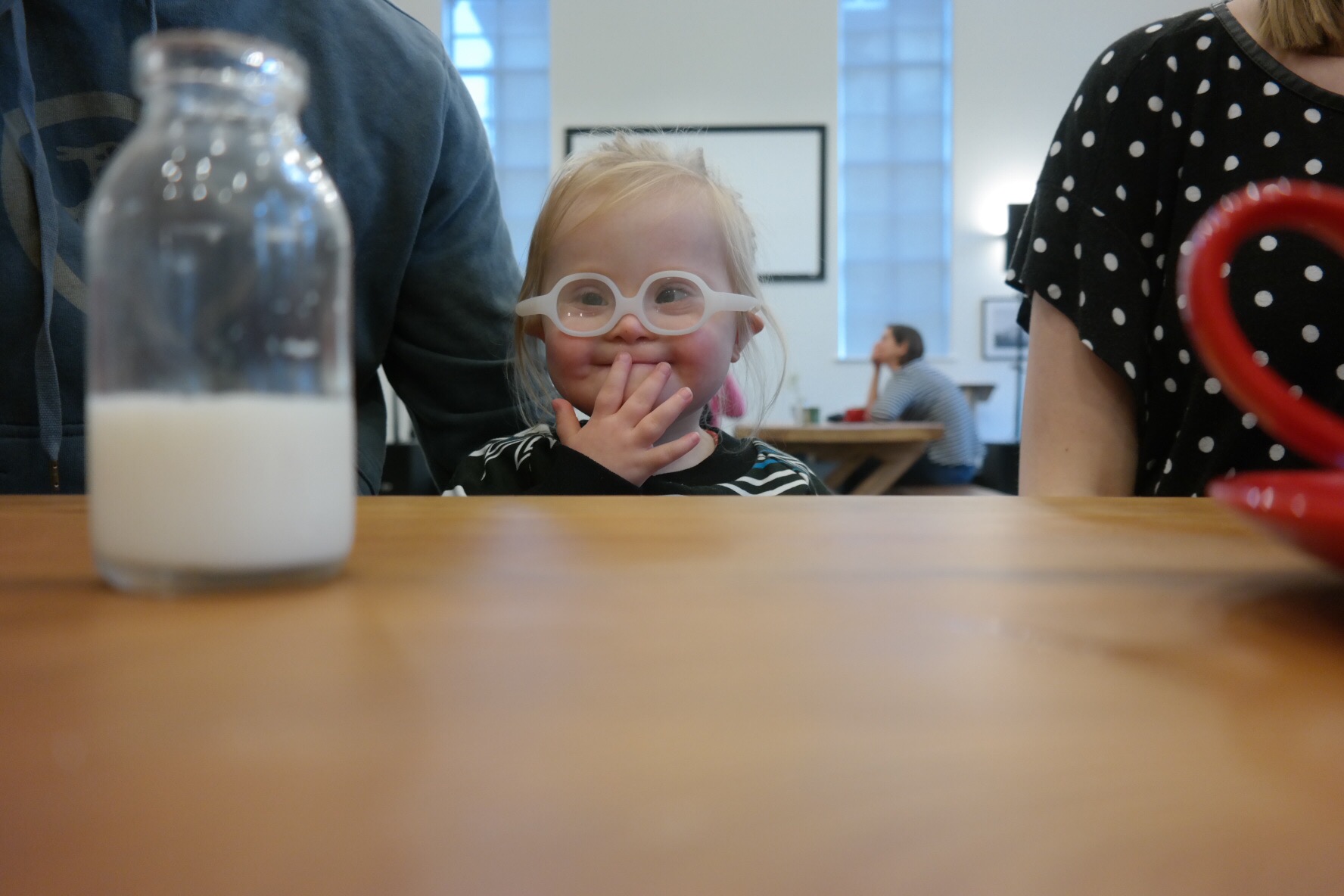
Actually kids do often point and stare at Audrey; because of her glasses. In a shop the other day, I heard a little boy say “That baby had goggles on!” Which made me laugh. We also got on the bus the other day and a 4 year old thought Audrey was hilarious, she said “I’ve never heard a baby talk before!!”.

In other news, Audrey’s baby brother is giving me a good kicking, we are on week 29 and counting, but having two children terrifies me, so best to keep him in there kicking for a while longer.

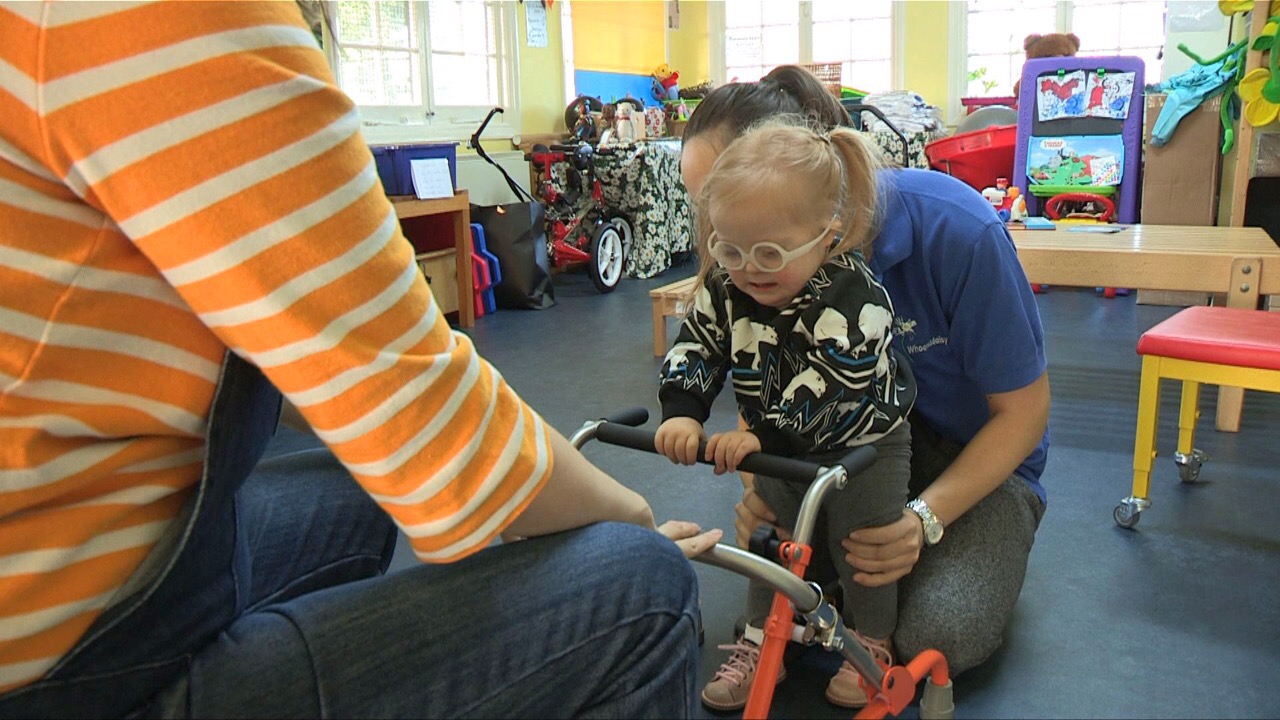
Here are some snaps from Audrey’s Conductive Education… It’s so amazing to have a picture of her standing up/walking!


Stereotypes; there must be more to life?

I was recently lifted by the sight of something so simple, natural and not out of the ordinary. Yet it was just what I wanted to see and it challenged that stereotype of a person with Down’s Syndrome that I found so desperately upsetting when Audrey was born.

I saw a young woman with Down’s Syndrome shopping with her dad in a supermarket. She had on colourful clothes and was carrying a blue Michael Kors handbag. I was watching them from afar (Audrey was asleep in the buggy) and as we went through the checkout and I noticed that Vogue was on offer (only £2!), I glanced down the rows of checkouts to see if she was still around… Just in time to see her leaving with a Vogue tucked under one arm.

This ridiculous thing made me feel so happy. I tried to think why… And I decided it’s about inclusion, representation and knowledge. Maybe it wouldn’t seem so amazing to see a fashionista with Down Syndrome if one popped up now and again on TV or in a magazine.

This is what I love about social media when it comes to the DS community. I can explore the diverse world of; people who are like me and people who are different. These two things make me happy in so many ways.

Connecting with people who are like you;

Well it makes you feel… connected. You can have banter about those things that you share in common, like shiny new Nike Airs or a good lemon drizzle cake or getting a fringe cut in.

Seeing people who are different;

What does the mother of a child with special needs look like? Is she mumsy? Old? Plain? Sensible? And what hobbies does she have? Knitting? Volunteering? Does she like music? Probably Cliff Richard? Or Daniel O’Donnell?  Well those preconceptions can be shattered.

Call me crazy, but pre-Audrey I imagined families with children with special needs. I thought: geeky. Respectable. Good. Boring. Worthy. A grey, depressing world. So I love to see families with children with special needs who do not fulfill that grey expectation… tattooed, blue haired, fat, thin, trendy, twee, perfect, messy, tacky, stylish… it’s just fun seeing that there are so many different families out there tied together by having that someone who has an extra chromosome. And we are all “representing” (this needs an American accent, doesn’t quite work in a British voice!). We are showing the spectrum rather than letting people imagine the grey.

Something that helps bind us to these families are the facial characteristics that are common in people with Down’s Syndrome. Imagine seeing another family whose child looks remarkably like yours… Freaky? Yes it can be a bit! But of course we see the beauty in those faces and we feel connected. It’s pretty amazing actually. An extended family.

A couple of months ago, I had my haircut at a new hairdresser. I have had the same home hairdresser for years and she was away and I needed sorting asap. So I had to go through the motions of small talk with a stranger. He was young (28), bearded and tattooed, I worried we’d have nothing to talk about, but he had a 5 week old baby girl and 2 stepsons so that made it easy; we can talk about kids, hurrah! I mentioned at that point we hadn’t really told everyone about our pregnancy as we were waiting for the 20 week scan, feeling a bit nervous after a miscarriage. He understood, he had some friends… They had the “Down’s test…” and I’m thinking “Oh no, don’t go there…” It was an out of body experience as I felt a bit sick and waited for him to finish this sad story of his friends and their scan… The baby had an extremely rare condition, it wouldn’t have survived, so they had a termination. A sad story and at this point I felt the need to say “I should probably mention that my daughter has Down’s Syndrome..”. He was a little embarrassed and rambled a bit about this specific condition not being like Down’s Syndrome and it was a bit uncomfortable for both of us. I felt I had a real opportunity to educate but I didn’t want to sound like I was preaching and I did find the situation difficult. He asked me “Is it tiring?” and I have to admit I wasn’t entirely sure what he was referring to at first! “Having a child with Down’s Syndrome?”, “Oh no! In fact, she’s probably not as tiring as her peers as she can’t run riot and she’s just very gentle and content most of the time”. It was weird discussing Audrey in this way; as a child with DS, rather than just a child – and someone wondering “Your kid has Down’s Syndrome, wow, what’s that like??”.

We bang the drum for inclusion and I guess some people wonder why. My brother actually thought it was funny we were so obsessed with seeing people with Down’s Syndrome on TV – I think to a certain extent he was being cynical in that advertisers and channels can use disability inclusion to ‘score brownie points’. And I get that. Pre-Audrey I may have agreed. “Oh they’ve shoe-horned a character in a wheelchair into this story line, yawn”. But now I view those things oh so differently. I am excited by the representation of minorities in the media now. No, I don’t want to see a Down’s Syndrome character forcefully added to every TV advert, but to see a face from our community every now and again is a nice feeling. Especially when it’s just representing life, not trying to represent disability.

And that’s what I’m trying to do with blogging about Audrey, just represent our life. And maybe (hopefully) we’ll reach someone who needed to see our life in order to change their perception of Down Syndrome for the better.


Featuring Down’s Syndrome doesn’t have to be a Catastrophe (har de har har)

This week I watched the Channel 4 comedy, Catastrophe. I’m behind on most things that air after 9pm, so thank the modern world for catch up.

I started series one on the laptop with headphones whilst Ted watched football. He’s always so apologetic about sport on TV, but sometimes it just gives me a chance to binge watch something he might not be that into. In this case, he’d definitely like Catastrophe, but that’s just tough. I enjoyed Sharon Horgan’s ‘Pulling’, so I had high hopes for this programme.

Anyway, this week I got to series 1, episode 4. *Spoiler alert for the rest of this post*! The series is about a couple who get pregnant after a fling and decide to make it work, Sharon Horgan’s character is over 40, so this is classed as a ‘geriatric pregnancy’ (!) and the couple are told their screening results have come back as a high risk for Down’s Syndrome – 1 in 50. As soon as screening was mentioned, my heckles went up and I felt that wave of dread come over me. This is a well written, funny, absurd but realistic comedy, at no point did I anticipate an uncomfortable encounter with them tackling Down’s Syndrome screening as a storyline. So I was scared of what was coming and I reached for Ted’s hand…

Of course the news that they are high risk is considered bad news. Of course it is. I don’t want storylines that sugar-coat reality for the sake of political correctness or being inoffensive. If we had received a high risk result, it would have been bad news to us. In general, people do not wish for their children to be disabled, I can’t fault them for this realistic portrayal of the news.

Anyway, they soon discover the results were even more high risk – 1 in 25 – and they have to make a decision about going ahead with amniocentesis. They have an open discussion about their exposure to DS. Rob has an uncle with Down’s Syndrome (and he showed him his first picture of a boob, so he liked him), Sharon knew a couple with a child with DS, but remembers the woman alone in her 70s, still caring for her adult son. She describes seeing them in the supermarket, the mother looking tired and old. Rob has a fab response  (along the lines of) “well for all you know they went home, smoked some weed, watched Judge Judy and had a great time”. It’s a balanced and realistic discussion about experiences of Down’s Syndrome.

They go ahead with the amniocentesis, but it’s well described by Sharon as something she’s uncomfortable about doing.

And then they get a call with the results… The baby (foetus at this stage) doesn’t have Down’s Syndrome. They are relieved. Again, I cannot fault this, it is good news that would come as a relief. A little part of me is disappointed at this juncture, we’ve followed the story and ultimately, they’ve dodged a bullet, hurray! 

But then they come good. Sharon is waiting in a queue and a beautiful little girl with Down’s Syndrome starts waving at her. At the sight of this child (as is so often the case when seeing a face with DS in the media), my heart swells. I think the mother apologises and Sharon says “She’s beautiful”. 

Yes I had a good cry. I felt they had acknowledged that had their baby tested positive for Down’s, it would have been ok.   I’m sure the feelings were mixed, maybe there’s relief in there, I don’t know, but I certainly felt like this wasn’t a moment for Sharon to think “Phew, I’m glad I don’t have one of those!”, I felt like they were showing that what could have been would have been beautiful, would have been ok.

Anyway, the show is really funny. It’s dirty c-word type funny, so not for everyone (my mum would be appalled), but I’m glad that a show like this could tackle a Down’s Syndrome storyline and do it well.

I tweeted Rob Delaney (just moments after my tearful relief at seeing that beautiful face of a girl with DS at the end) to say I loved it and he replied. I was pretty excited to say the least, he has over a million followers!! And he is a good-looking hairy man who writes an excellent show. Woo hoo!

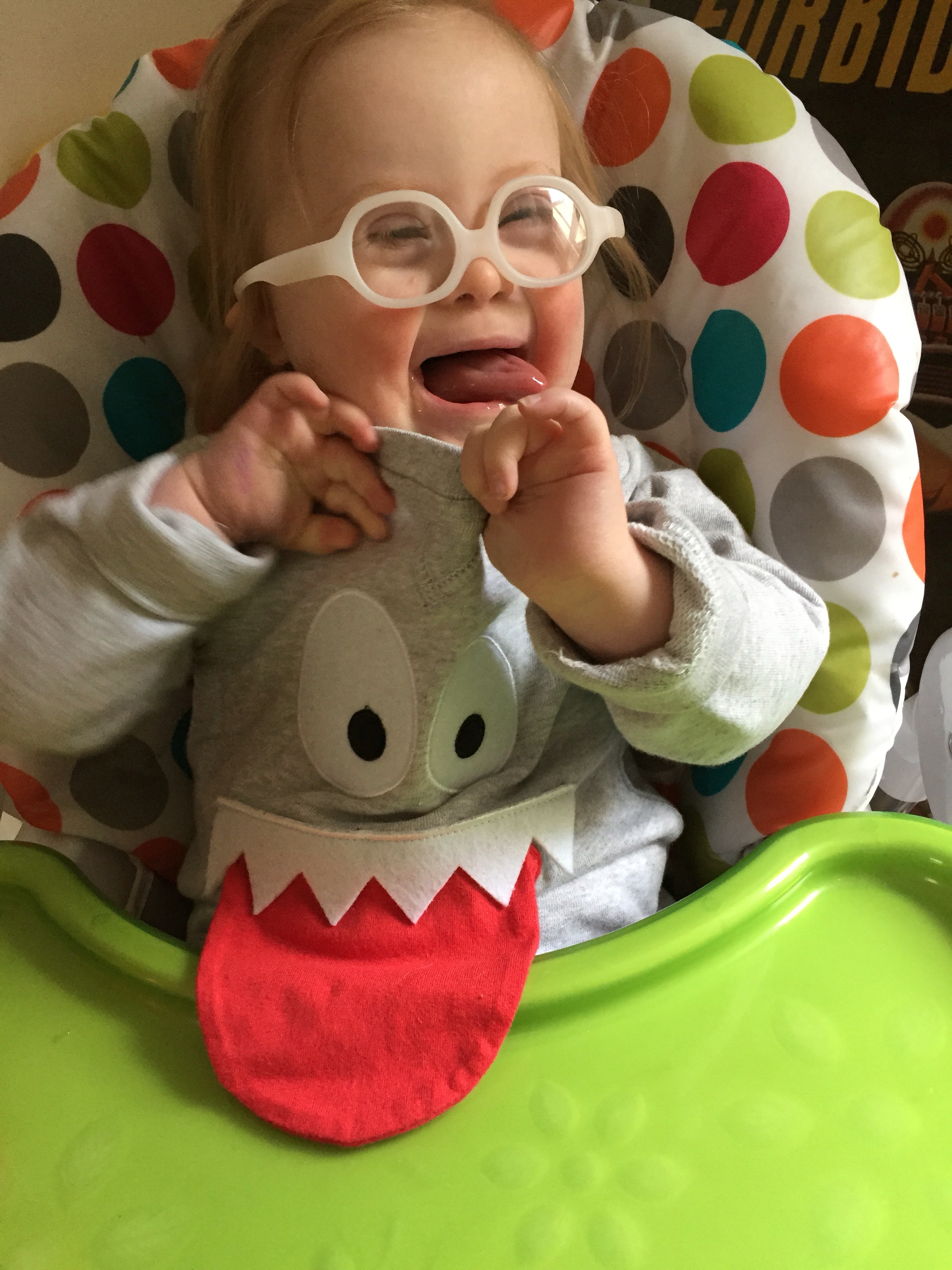
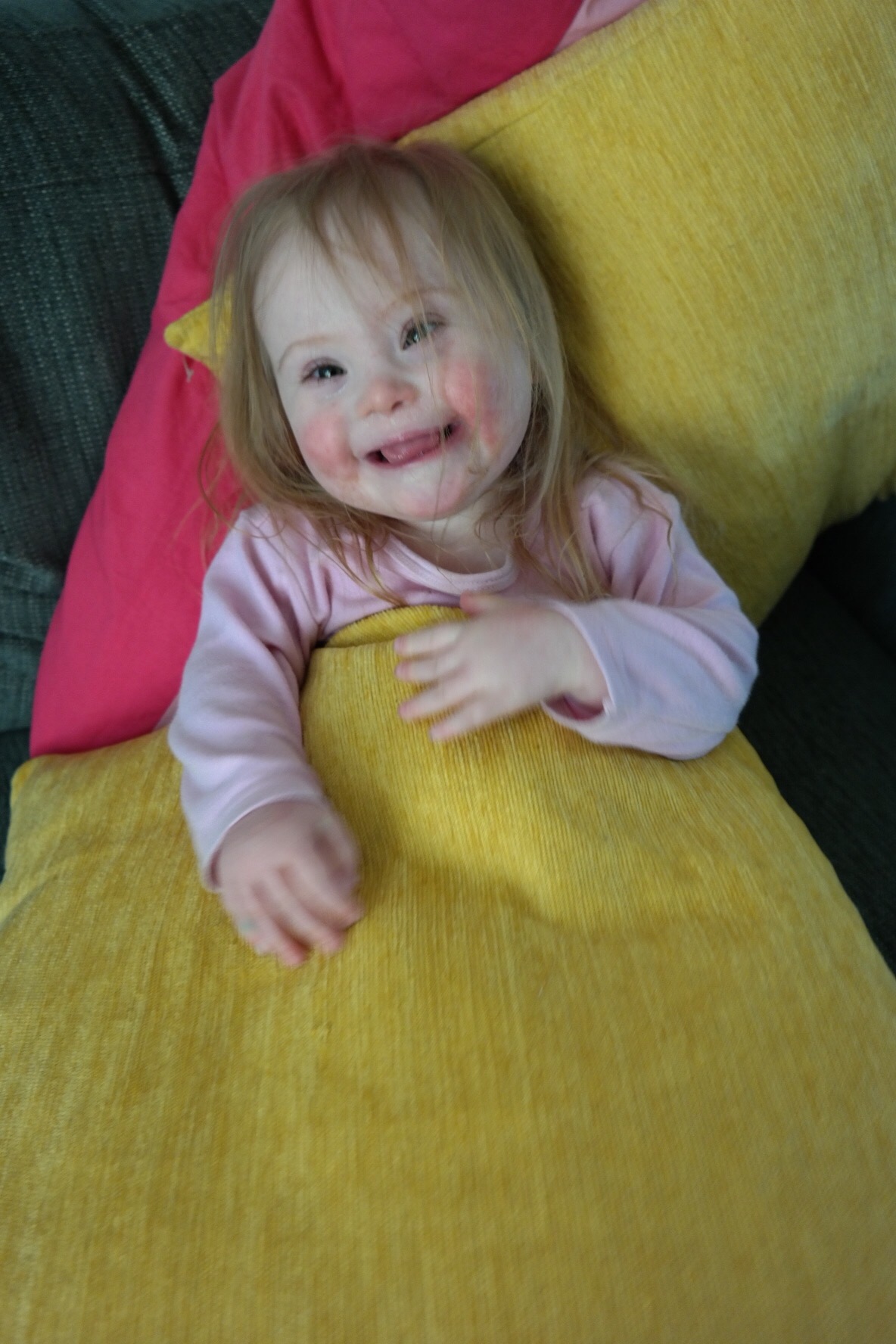
Audrey has been poorly for a week and has quite a spotty face, so she’s not up for fancy pics, that said, she’ll still blow kisses even when under the weather!

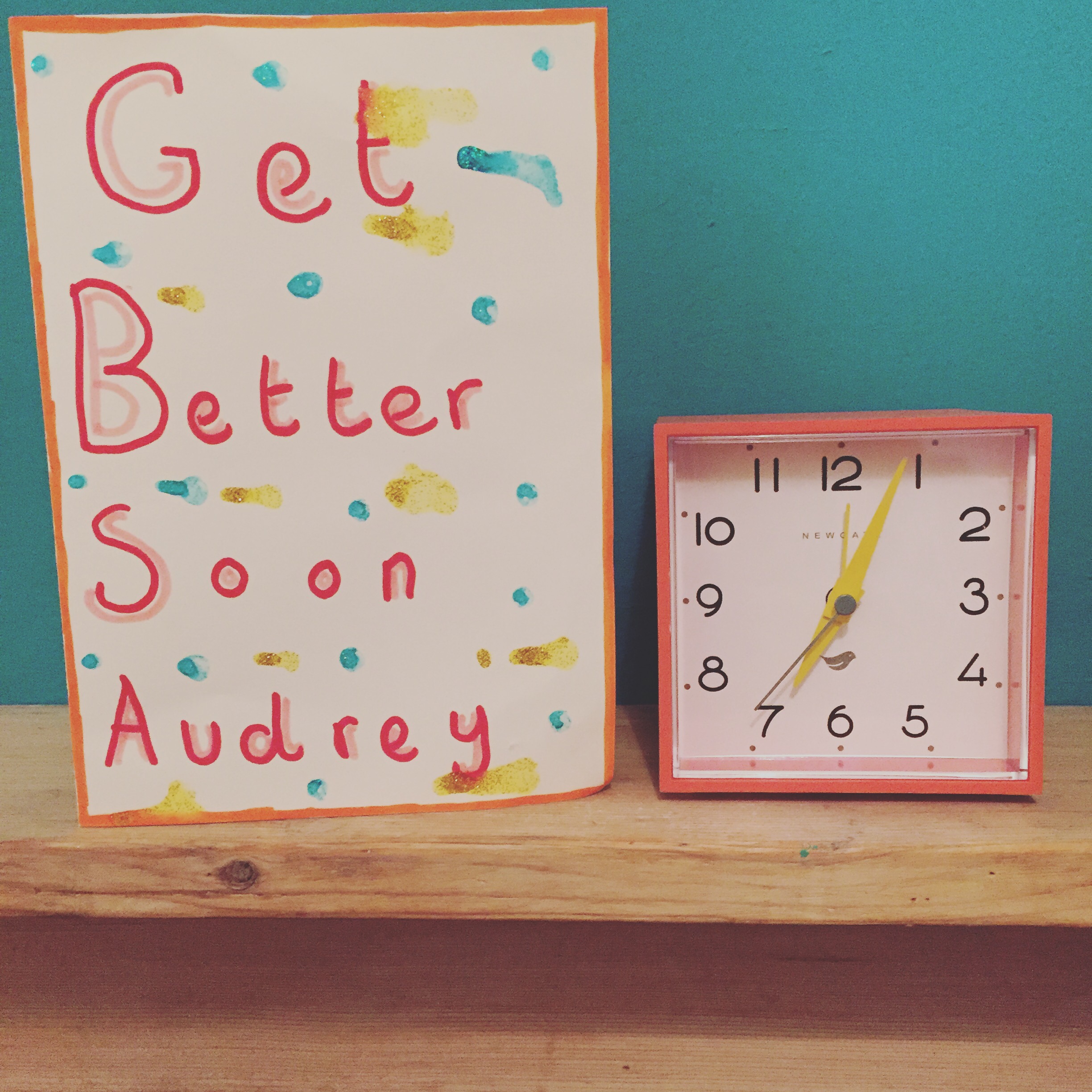
And check out the colour scheme matching card from nursery!


Chatty Cathy

Audrey’s speech and language has been progressing amazingly. We are constantly surprised by what she understands, what she attempts to say or sign and how much she remembers.

I guess this is how it is when something has lowered your expectations – a label is stuck on her warning she will be slow at learning, she will be behind, she will have a disadvantage. So when she excels, we are blown away.

Recently, Audrey pointed to the picture of a red bus on her pyjamas and said “bus”. When police sirens go by Audrey says “nee nar”. We go upstairs and Audrey says “upstairs” and for the first time, we’ve heard her saying numbers. 

A sales assistant wearing a baseball cap is chatting to us and Audrey touches her head and says “hat”. Such minor things that make us so proud of her.

One of her consistent signs with no word has been water. A few weeks ago Audrey started saying “ter” along with the sign, which was great, but now she’s progressed to “ter ter”, I guess this sounds minor, but in our world it’s major.

This week was a big one for speech milestones – Audrey said “Audrey” (and signed it too), having spent quite a while saying “Dee” as the closest to her name and then only in reference to watching videos of herself on my phone! We have also been working on 2 or 3 word combinations and have had some success with Audrey (unprompted) saying “more please” and even “more toast please”.

She is also singing words and will pick out the ones she can say, like “star” and “are” or “head” and “toes”.  

When I collected her from nursery yesterday they said she was shouting out names all day. It’s so nice as her peers have being saying “Audrey” for a while and she can now attempt their names too. I do find she is more likely to try the word if there is a sign attached, so we are still using Makaton even has her speech moves forward. Lots of her words would be hard to understand without combining it with a sign – a good example, some thing we do a lot, say and sign a lot, is… Cuddles. Audrey’s word for cuddles has, in recent days, sounded like “Dennis”, which has been amusing, but it’s taking shape and sounding more as it should as each day goes by. But because she says “Dennis” and signs for cuddles, we’ve been able to understand her which is great.

I’ve been so inspired by all the early years teaching that I’ve taken Audrey to, I am now going to undertake some Makaton training in the hope of using it professionally in the future. I love the idea of helping children progress and communicate through sign and play and singing. It’s all been so great for Audrey’s development. And educating adults too – people need to know what a great help signing can be for progressing little ones’ language skills.

Audrey has changed our lives just like any child changes their parents’ lives, but she’s opened up my eyes to many things I would never have been exposed to otherwise and she has made me want to change my career completely, so she has had a pretty dramatic effect on me! I’m so thankful she’s ours.


Friday the Physio Part 2

What a difference a week can make. After our last physio experience at the new Friday sessions, that left me tearful (to say the least), I knew I had to tackle it again and make the best of it…

We set off on the bus and Audrey was full of beans as usual. Waves and kisses, requesting singing. 

We arrived at the group and we kicked off “walking” over to a table of stuffed toy dogs. The ladies were there welcoming and smiling, I explained how hard I found it and kept saying things like “I’m no good at pushing her, which is why I know it’s good to be here, because you are comfortable pushing her” and “Oh she is really going to hate that” – they (rightfully) picked me up on this and explained I needed to be more positive. We are “encouraging” her, not “pushing” and take on each task telling Audrey “this is going to be fun!” Rather than anticipating her hating it!

Actually, I was surprised at myself, because in general, I do think of myself as a positive person.

Today I was thinking about the ability to look on the bright side. I am generally a glass-half-full person without really giving it much thought. I mean, I don’t think of myself as always upbeat and full of smiles… But the fact is; I am a positive person by nature.

When Audrey was born I remember thinking (when wrestling with the news that she had Down’s Syndrome); what would be the worst thing that could have happened – would I rather this baby was dead? And of course the answer was no. I kept reminding myself that we were very lucky she was alive and that was the most important thing. Was this ‘syndrome’ really the end of the world? No.

Then when we had to deal with her coming home on oxygen, I kept reminding myself that we were so lucky she didn’t need any surgery and that her heart was healthy.

And now we have a bum-shuffler who cannot stand unaided, but I’m so very grateful that she is mobile at all and I focus on her other achievements which feel more important. Audrey can’t walk or stand, but she can ask for food and drink and she understands so much of what we say. Communicating is an amazing thing and it really helps us feel connected to her.
Her nature, just the way she is, naturally gives us reason to be positive. Smiles, giggles, kisses and cuddles – for the most part, that’s what our time with Audrey is all about. There’s no need to dwell on blood tests, physio sessions, developmental delays… In fact, I’ve seen many other parents of kids with DS revel in the fact they get a baby for longer. Time flies, but it’s flying a little slower with Audrey.

Onwards and upwards in our physiotherapy (I say this as Daddy and Bibi are taking her this week!!).

This was us taking a toilet selfie after speech and language therapy last week -which went very well by the way. We are working on two word phrases and since the session Audrey has said “more please” and “more toast please” woo hoo! 


The downs 

Audrey doesn’t have a lot of physiotherapy sessions as the NHS service here is understaffed. This hasn’t been ideal, but I haven’t been excessively worried about it.

As we near the arrival of Audrey’s baby brother however, I do grow concerned over her lack of interest in standing/walking and I want this to progress as quickly as it comfortably can.

The truth is, we’ve been given exercises to work on at home, but I hardly do them because Audrey gets grumbly/upset. I basically let her get away with 20 seconds of standing here and there and then give up.

Some other parents of children with special needs recommended a local service (funded by a charity) that offers physio on a weekly basis, so I got in touch and we attended our first session Friday morning.

I’m not sure I can quite put into words what it was like. The funny thing is, I’m sure the ladies running it would have had absolutely no idea that when I left I had a cry on a friend’s shoulder because I found it all so hard. When I was at the session I bottled up all my feelings and was polite and thankful for their help. And that’s the thing – they were helping, this wasn’t a torture group! But oh it felt like torture.

Audrey was given some shoes to wear (the new boots we bought her just a week ago aren’t supportive enough) and she was “encouraged” to be in certain positions (kneeling, standing, walking(!), sitting and crawling). Audrey was her usual friendly, kiss-blowing fabulousness – but she spent much of the time saying “nished” (finished), “no” or simply grizzling. The bottom lip came out in full force (I just wanted to cuddle her!) and there were tears (from her, mine came later).

The ladies running the session assured me she wasn’t that upset (they’d seen worse) and they were encouraging… But it was one of the first times I felt fully exposed to a feeling that things were hard. That having a child with Down’s Syndrome involves a struggle. And I was angry that I have to put her through that in order to progress her walking… It won’t just come to her, we’ll have to work hard and it will be hard.

It was also just really horrible going to a group that wasn’t fun. Don’t get me wrong, they sang and we looked at books and drew pictures and had a snack… Most of the usual stuff… But normally I go to groups specifically for Audrey to dance and have fun (sometimes whilst learning of course), but I sit there beaming with pride whilst she does her thing and we leave happy.

This involved all the grizzling, plus questions about what she can and can’t do. It just highlighted her issues, rather than all the positives I usually focus on.

And I appreciate that there’s no use in me ignoring the tough stuff – we have to deal with it and get through it. But I guess I am haunted a little by some lovely things people said when we first had Audrey… “She’s so lucky to have you as parents, you’ll work so hard for her”, lots of people said we’d be so great at helping her progress and I felt worried about this expectation because I’m quite lazy, forgetful and also a soft touch – this combination doesn’t make for a great task master! I knew we’d work hard on the signing, speech and read to her a lot, we would play and hopefully make it educational… But I wasn’t confident I’d “push” her. So I guess this group highlighted this insecurity – or rather exposed it!

Now it’s been over 24 hours since the group, I’m feeling better about it (and remember, I am a mess of pregnancy hormones), so onwards and upwards! We’ll work hard and Audrey will enjoy standing up eventually and when she’s walking, all this tough love will have been worth it.

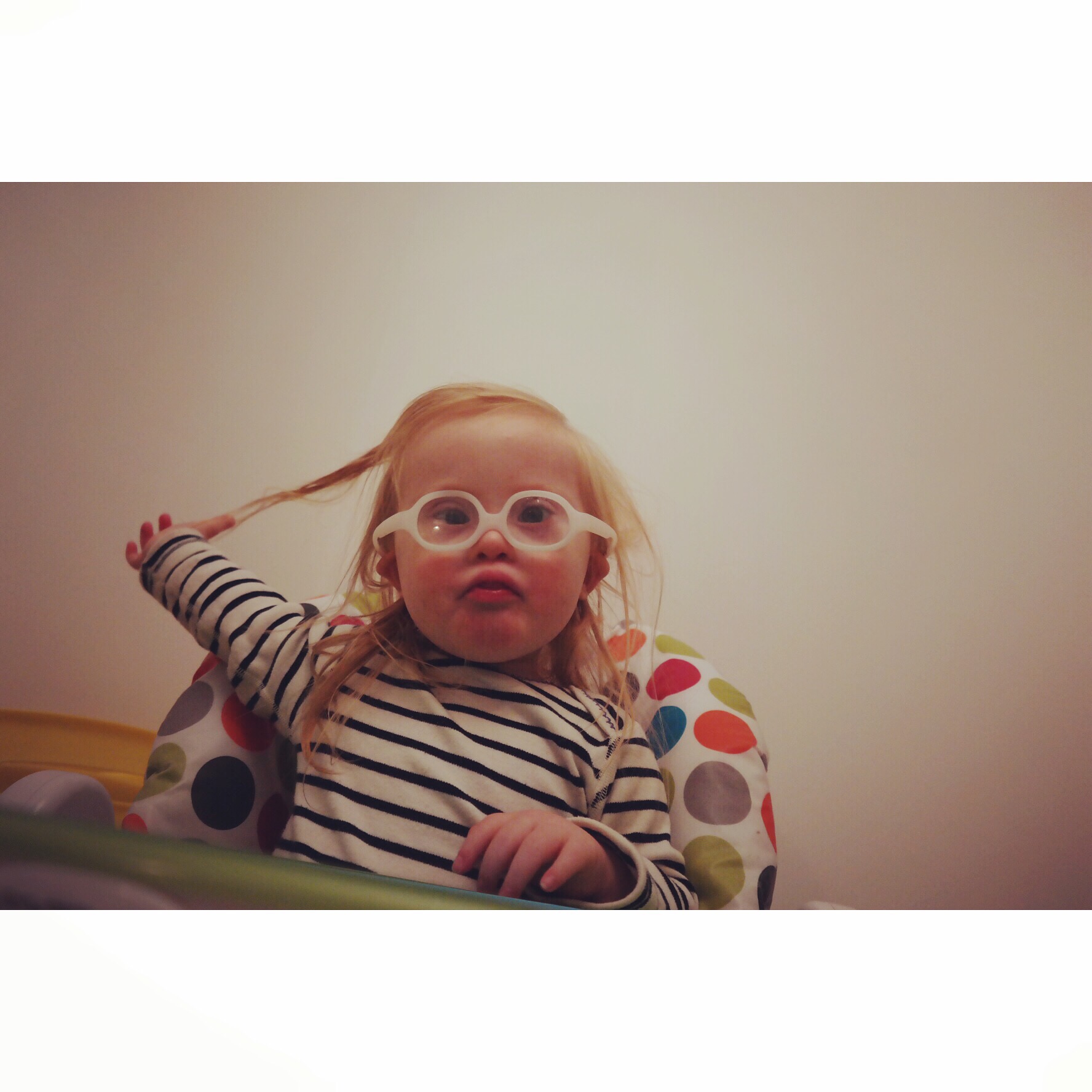
I don’t have any pictures from the group, but I’ve always got pictures of Audrey to share, so here she is from this morning:


Down’s Syndrome Awareness Month 2015

October is Down’s Syndrome Awareness Month. 

Sometimes I feel like I’m living DS awareness continually and I don’t need to highlight the month (I imagine friends and family thinking “Yawn. Yes, we know you have a kid with Down’s Syndrome, stop banging on about it!”), but then I realise it’s an opportunity not to be missed.

I’m always trying to raise awareness that Audrey is great and we are happy – that having a child with DS might not be what people expect. But I also realise that our reality with Audrey isn’t everyone’s reality of living with a child with DS. I’m still keen to spread awareness that she’s everything we hoped for and more, but for this month I’d like to teach people a few important things too. So I’m going to try to cover some topics that people commonly don’t know, questions we get asked or uncomfortable language people use without realising.

1). Language does matter.

When Audrey was first born, I thought people were being petty over “a baby with Down’s Syndrome” rather than a “Down’s Syndrome baby”. But as things have progressed, it does grate when that language comes up. You start to feel strongly that your child is just a human being who happens to have DS. They are not “Down’s Syndrome”, they have it. My mum in particular used to say “just because Audrey is Down’s…” And I had to correct her, because she isn’t “Down’s”, she’s Audrey! This is a tricky one, because I wouldn’t say “a person who is deaf”, I’d probably say “deaf person”, although I guess the preferred term now is “hearing impaired”?  So I understand it’s hard to get this language right and no one wants to feel all politically-correct-crazy. But do think before you speak if possible…

You wouldn’t expect it, but often other people with family members with DS are the worst. Just this week I’ve had someone say “I have one the same” (pointing at Audrey) and “My sister had a Down’s kid… They’re so loving, aren’t they?”. Yeesh. 

Oh and when you are referring to other children and discussing my child with DS, those other children are “typical” children, not “normal” children. Obviously it’s uncomfortable to imply Audrey is abnormal!

2). Different.

Children with Down’s Syndrome have lots in common, due to the condition (and I’m going to cover some of those things in this post), but they are all different. Just like typical people. Crazy, eh? People who have Down’s Syndrome are people. So they can be naughty, they can be into heavy metal or be gay – yep, just like typical people they all have different thoughts, feelings and interests. So they don’t all love cuddles (although luckily Audrey does, phew). 

Again, I might get asked “When do they expect her to walk?”, “Has anyone been able to give you an idea of how mentally able she’ll be?”. I appreciate the interest and I know people mean well, but unfortunately all we know in general is that she will be on a slower learning curve than typical kids, but even that could be smashed… Audrey was the first back to front roller in our group for example. But she’s 26 months old and still not walking, so how about we just see how she gets on and not over analyse, ok?

3). Low muscle tone. 

Now, this is something I had no idea about pre-Audrey. Babies with DS usually have low muscle tone, which means they are a bit “floppy”. This results in a delay in physical milestones such as sitting up unaided, crawling, walking and the issue also affects the muscles in the mouth (the tongue and palate etc), which also makes it trickier for speech development. This is a useful one for people to understand as it would be nice if it wasn’t a shock that Audrey still isn’t walking. I also think it’s useful to know it’s not that Audrey hasn’t figure out how to walk, it’s that she physically doesn’t have the muscle tone to stand and walk. She’ll get there, it’s just going to take some work. In the meantime, the bottom shuffle is epic.

4). Learning difficulties. 

Most people associate this with Down’s Syndrome. In general they will be a bit behind typical children, but beyond that we can’t predict how Audrey will progress with any more accuracy than you can decide at 2 years old if little Tarquin is going to be a brain surgeon. 

One good thing about a recognisable condition such as DS; there’s so much research and history, that professionals know what works in terms of teaching. Kids with Down’s Syndrome typically enjoy reading and are visual learners. I’m told by Audrey’s special educational needs practicitioner that many children with DS start school ahead of their typical peers in terms of literacy, as they will have had so much focus and attention on that area and generally respond well to books.

I feel like I’ve gone from worrying about Audrey’s academic future, to feeling excited by it!

5). Being Mongolian.

The Mongolian thing just amuses me. Not long after Audrey was born, I looked up the term “mong” because I remembered it as a derogatory term used in playgrounds when I was younger. I knew this was a term used for people with Down’s Syndrome, but I didn’t know why. When I found out why, I just thought it was ridiculous. John Langdon Down (the man who first classified the syndrome, finding the shared characteristics), thought that people with DS looked like the Mongolian race due to a similar physical appearance and labelled them “Mongoloids”. It just feels a bit ridiculous now, “Ooh you look a bit Mongolian…”. Clearly, the term moved on from a classification to become a term of derision and abuse and I would be appalled if anyone called Audrey a “mong”, so please don’t take any of this the wrong way.

Ted and I have often joked that our genes plus a dash of Mongolian = one beautiful baby. The Mongolians should be flattered.

So what are these exotic features… Well, it’s almond shaped eyes, a button nose (sometimes quite flat), the crease under the eyes and small ears. Possibly also the fact that people with DS are generally quite short, with shorter limbs? 

Poor Audrey, Daddy’s not exactly a giant, but I’ve got serious shorties on my side, so she was never going to compete with Naomi Campbell on height. My mother is under 5 feet tall!

Anyway, I’m going to leave it there for this post. I hope some of it it was useful/interesting… But if you take anything away from Down Syndrome Awareness Month, let it be this; people with DS are similar in some ways, just like the human race is, but they are also individuals. We never know what to attribute Audrey’s qualities to. Is it because she’s;

A girl?

A child with Down’s Syndrome?

Our child?

Her own person?

A 2 year old?

A Brightonian?

Influenced by nursery?

Nature nurture blah blah blah… She’s just Audrey.